Partner POV | How AI Bots and Agents Will Shape 2026
In this article
This article was written and contributed by, Akamai.
Reflecting on 2025 AI bot traffic trends
In 2025, AI bot traffic across the Akamai network surged; it's up more than 300% since we began tracking it. Across our AI bot categories, AI training crawlers continued to account for the largest share of AI bot activity and remained relatively stable for most of the year (Figure 1).

As we moved into the second half of 2025, we noticed that a bit of a shift was happening. We saw notable growth from AI fetchers and AI search crawlers in Q3, suggesting broader downstream consumption and use of AI-generated content (Figure 2, left). We believed we would continue to see this trend as more users became comfortable with using AI tools to assist with day-to-day online tasks and searches.
That momentum shifted in Q4, however, when traffic from AI fetchers and search crawlers declined while AI training crawler traffic accelerated sharply (Figure 2, right).
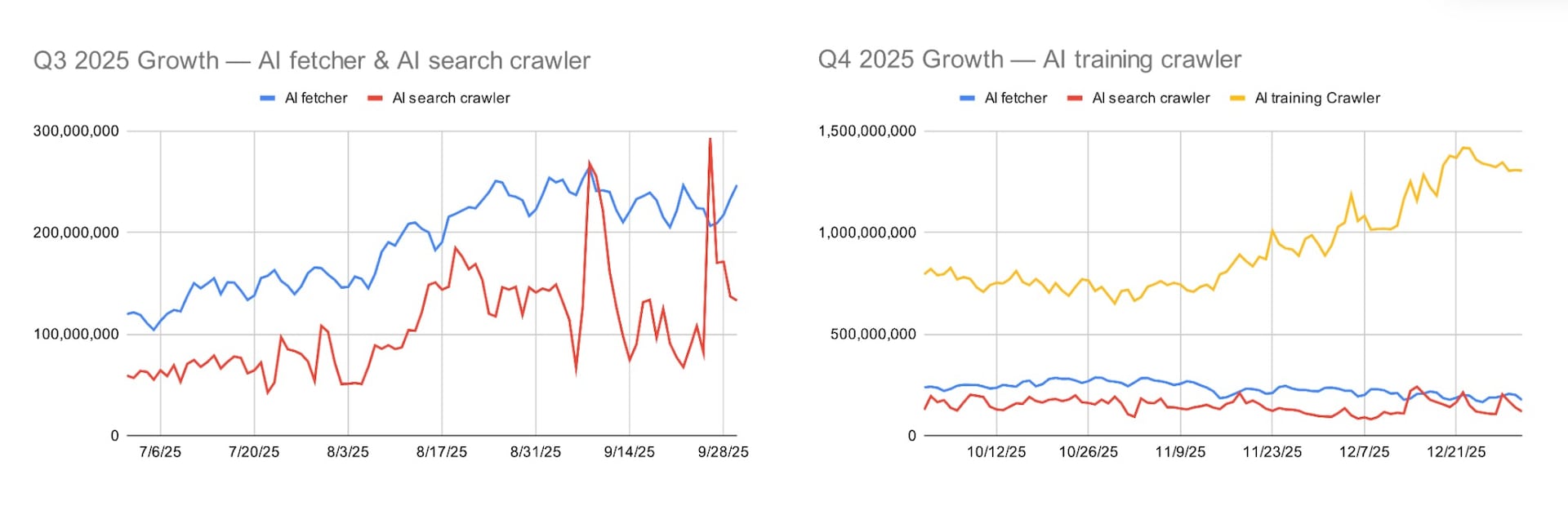
These rapid shifts reflect a landscape shaped by ongoing optimization, evolving model architectures, and changing use patterns, and provide important signals as we look ahead to how AI bot traffic may take shape in 2026.
Our predictions for agentic commerce and digital experiences in 2026
Our predictions for 2026 include:
- AI will continue to act as a filter in areas with information overload
- AI optimization will be critical
- Agentic commerce will be permissioned
- Blocking will shift to a competitive disadvantage
1. AI will continue to act as a filter in areas with information overload
Travel, retail, and media are currently the largest and fastest-growing industries in terms of AI bot traffic (Figure 3).
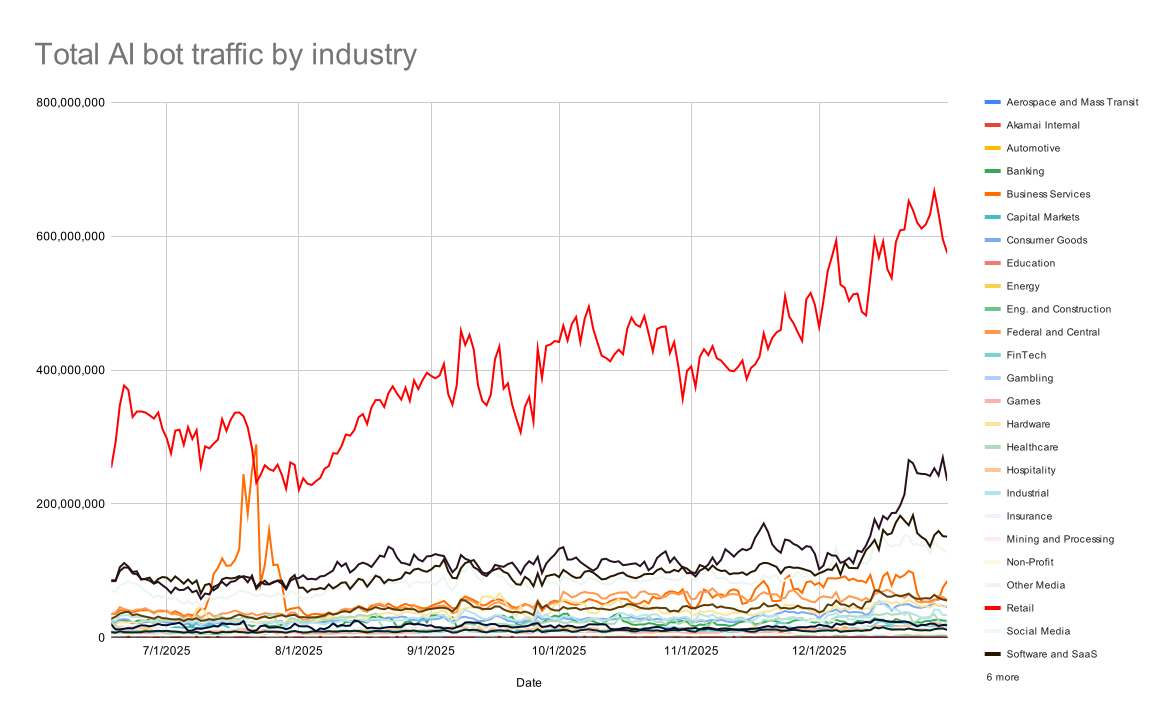
Businesses across these industries are constantly adding and updating inventory, sharing new content, and dynamically adjusting pricing in real time. As a result, AI bots must repeatedly access these sites to keep data accurate, whether for model training or live responses.
This dynamic suggests continued growth in AI bot activity, with bots increasingly serving as a critical layer for aggregating, filtering, and operationalizing data across businesses in these industries.
2. AI optimization will be critical
AI bots and agents go where they are wanted. A permissive mitigation stance, AI-focused content optimization, and differentiated, high-quality content are already proving to be the strongest drivers of inbound AI requests. When bots can't easily find, access, or interpret the content they're looking for, they simply move on.
We see this clearly in the data: Across all customers, AI bot traffic grew significantly: up by 185 million requests per day (1.42x). Among our top 20 customers in terms of AI bot traffic, growth was even more pronounced: up by 203 million requests per day (1.25x; Figure 4).
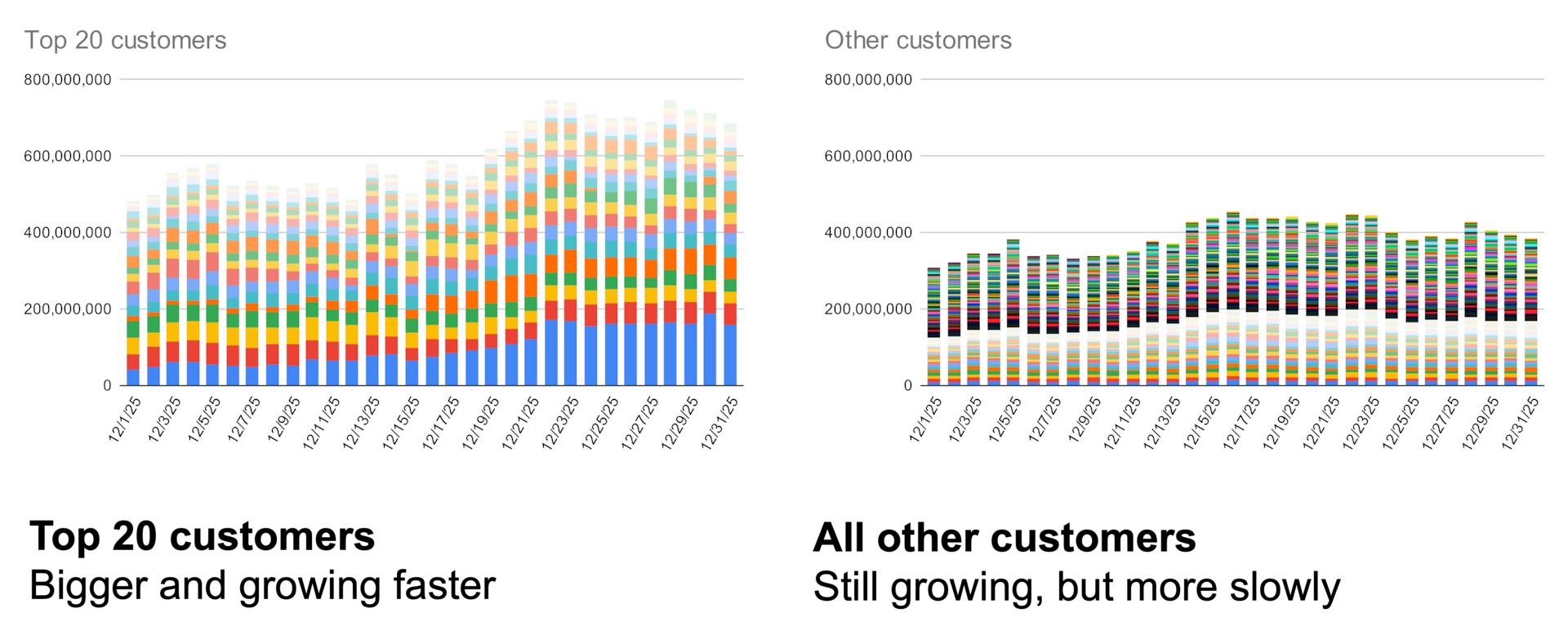
These top customers accounted for a disproportionate share of AI bot traffic overall and drove the majority of December's AI bot growth, reinforcing a clear signal for 2026: AI bots will increasingly favor destinations that are accessible, optimized, and explicitly designed for AI consumption.
Oddly, at the same time, agentic AI bot traffic has declined.
While retail remains a primary driver, nearly every industry vertical has seen agentic activity fall since Cyber Week 2025 (Figure 5).
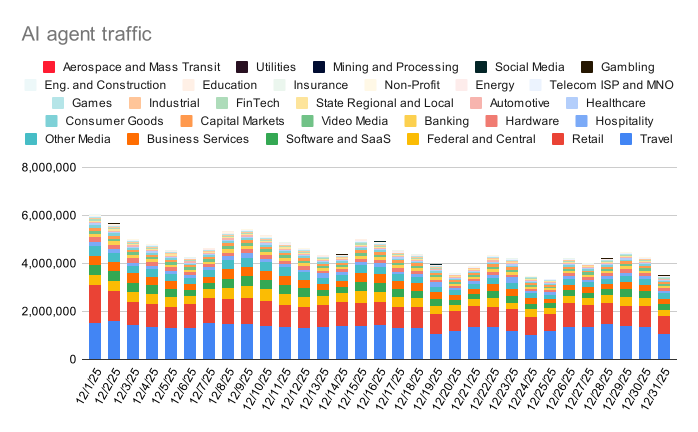
This shift suggests end users are moving beyond experimentation toward real agentic use, while many site owners are failing to provide the specificity agents require. The promise of agentic consumer AI is tightly coupled with precise, structured, and accessible information, and without it, agents will continue to disengage.
Example: Not getting the details right
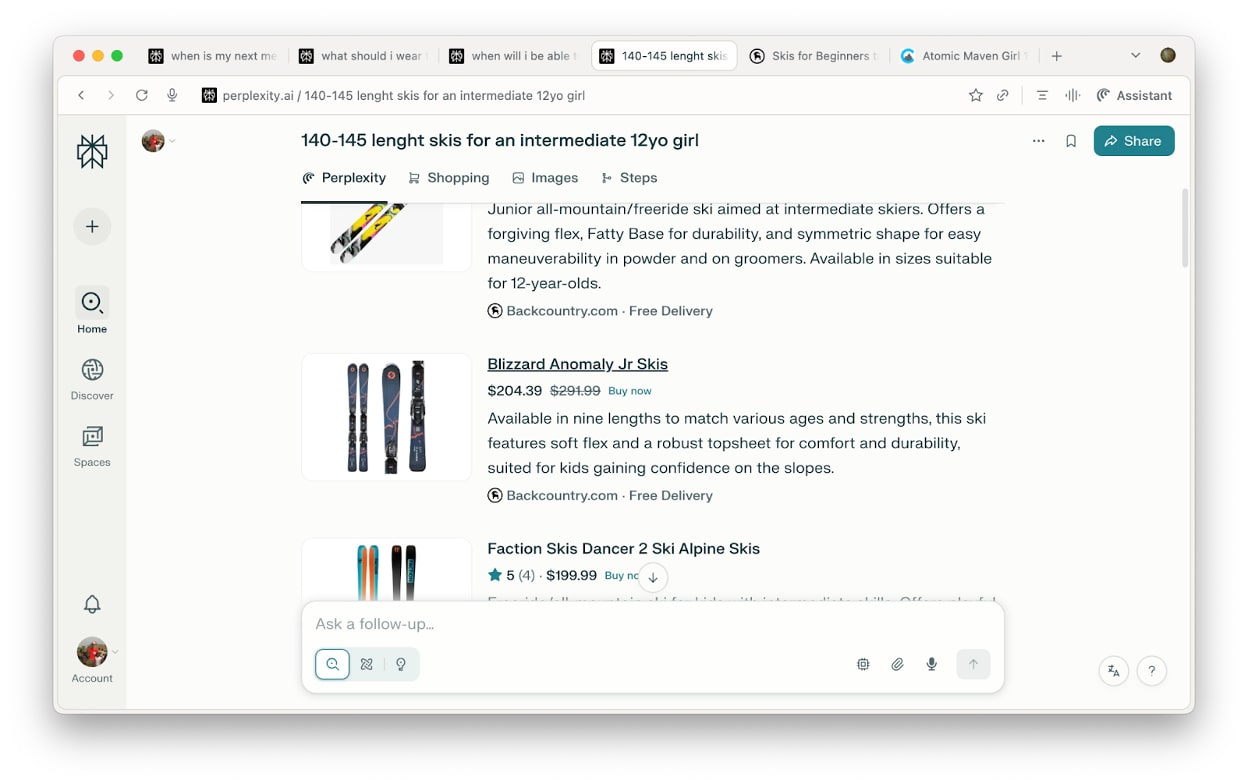
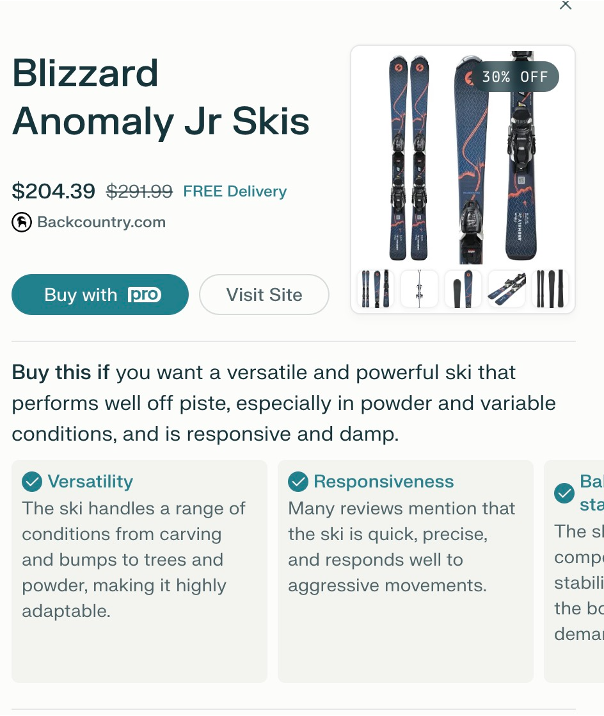
This challenge becomes clear when looking at how AI agents behave in real-world shopping scenarios. For example, when searching for a good deal on a pair of girl's skis in a specific size (145 cm), AI-powered tools like Perplexity's Comet browser can gracefully handle typos and surface relevant options (Figures 6–7).
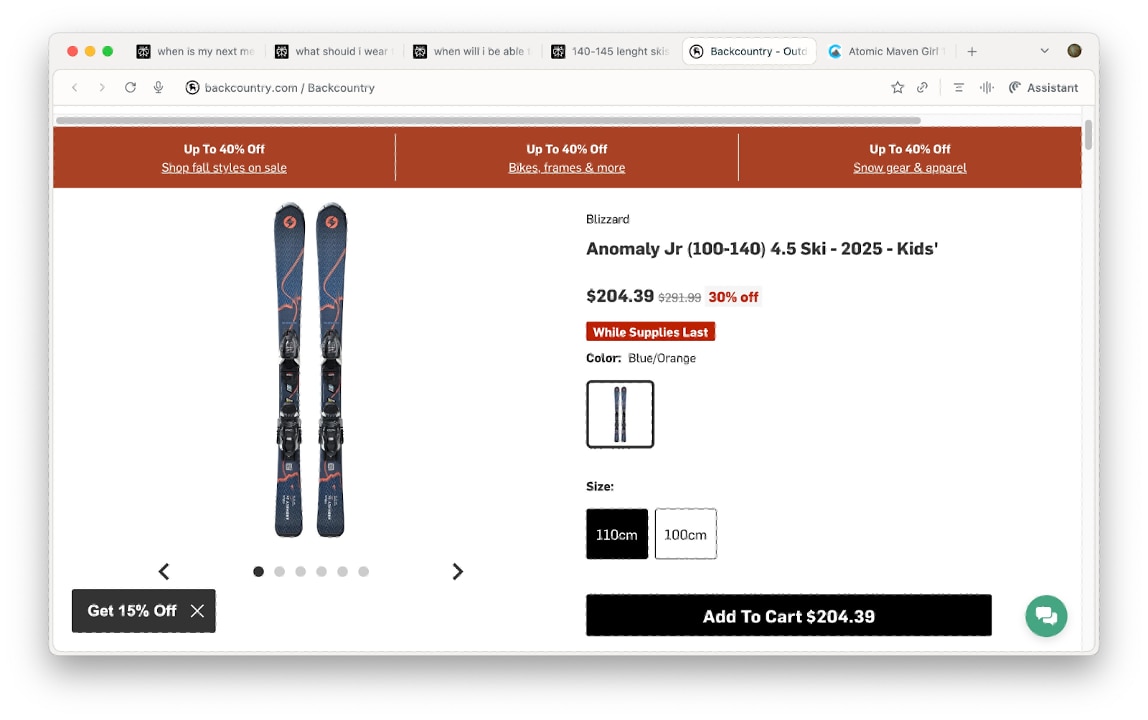
But relevance alone isn't enough. If a suggested site doesn't actually have the specified size available for purchase, it quickly falls out of consideration (Figure 8).
You can't tell an agent to "buy now" without getting the details right, and that goes far beyond basic product attributes to include fulfillment options, pricing accuracy, and loyalty programs. Agentic AI will continue to be constrained, but not by AI vendors. Instead, progress will be limited by how well businesses expose precise, structured, and actionable data. A small set of early adopters will mark up pages and APIs to enable true agentic use cases, gaining a first-mover advantage as AI agents increasingly favor their sites, creating a virtuous cycle.
For everyone else, familiar issues like size or availability mismatches become fatal flaws in the agentic era. "Why are all the AI agents going to our competitors?" will be a common refrain, and one that forces rapid change. In hindsight, attempts to block AI traffic in 2025 will feel quaint.
In 2026, AI readiness — whether framed as enablement, optimization, or accessibility — will be unavoidable.
3. Agentic commerce will be permissioned
In 2026, agentic commerce will scale only where trust and permission are clearly established. The limiting factor won't be AI capability, but whether merchants can verify who an agent represents and what it's authorized to do.
That's why industry efforts, such as Visa's Trusted Agent Protocol and Skyfire's Know Your Agent, combined with broader agent verification and identity frameworks, will become foundational to agent-based transactions.
Rather than treating agents as anonymous automation, leading businesses will recognize them as a new class of participant that requires explicit verification, differentiated access, and well-defined rules of engagement. Agentic commerce will emerge first in environments where these signals are present.
4. Blocking will shift to a competitive disadvantage
In 2025, it made sense for many teams to hit the brakes while they figured out what AI traffic actually meant for their business. But heading into 2026, that mindset will start to work against you.
As AI agents increasingly influence discovery, recommendations, and purchases, blocking them outright means opting out of how decisions are getting made. The smarter approach is to move away from blanket blocks and toward selective access and to treat AI traffic differently based on who's behind it and what they're trying to do.
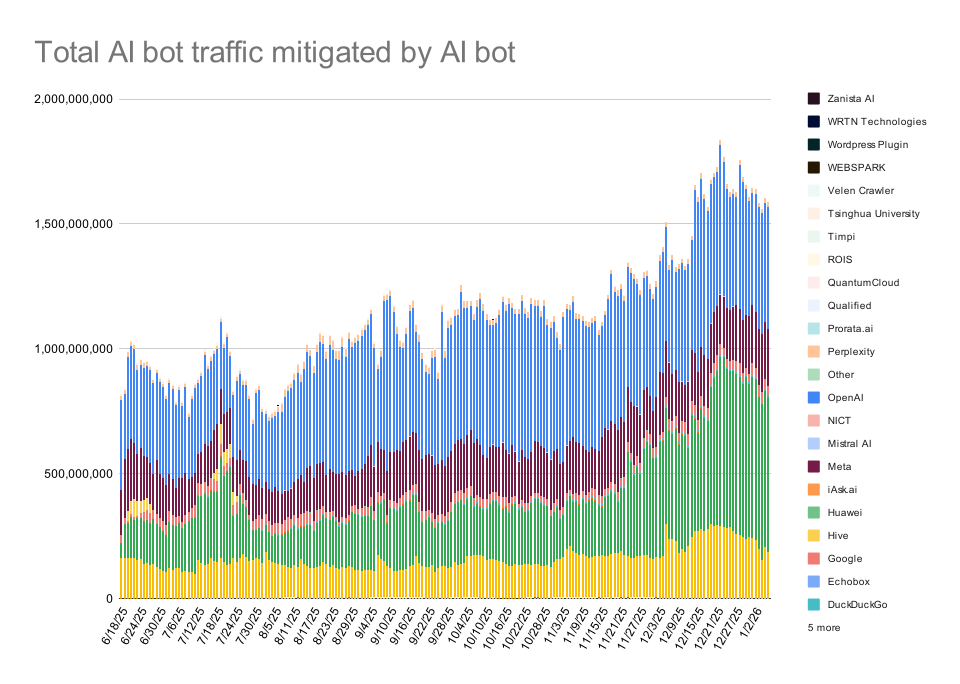
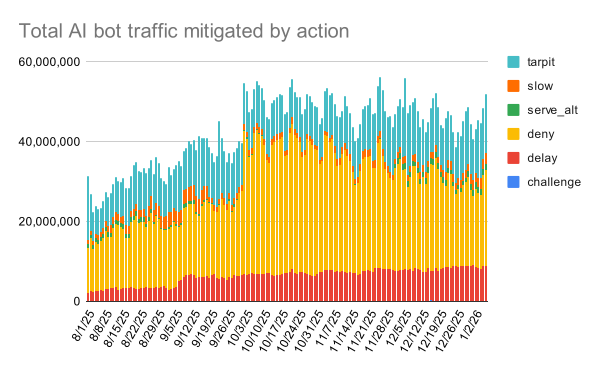
By looking back at the past six months, we see that although mitigation is increasing across Akamai customers, there are clear decisions being made for specific AI bots and what actions to take outside of outright denial (Figures 9 and 10). The goal isn't to keep AI out; it's to stay in control while still being part of the conversation.
The so what
The way AI interacts with the web is fundamentally changing how visibility, choice, and value are created online. As agents take on a larger role in filtering information and acting on behalf of users, businesses will have far less room for ambiguity. Being easy for AI to understand, trust, and act on will matter more than being loud or simply present.
In 2026, the advantage will shift to organizations that design for agent interaction from the start and treat AI traffic as something to shape and guide, not avoid. Those businesses will influence where agents go and what they choose, while others will be left reacting to outcomes they no longer control.